
Most Recent Blog Posts

I know what you’re thinking; “I’ve been breathing my whole life: I don’t think there’s much to learn”. Au contraire, mon frere. I can state without hesitation that there was much that I learned about breathing while putting together this article. I can also state that my chronic neck pain is virtually gone, and my sleep is much improved.

Traditionally, the definition of an accident has implied that something undesirable occurred that was unanticipated and thus probably uncontrollable. In other words, an unpredictable encounter between a human and the environment.
Yes, Shakespeare described the stages fairly and accurately. We men are somewhere on that spectrum. And remember this was the end of the 16th century, so although the Bard described some awesome women characters, it was basically a man's world. For a more relatable take on the Seven Ages of Man consider the Disney characters:

Because sailors spend much of their life on the water – which is constantly shifting beneath their feet – balance on the water is an everpresent problem. Ergo, “One Hand For Yourself, One Hand For the Ship.” But when most sailors consider balance on the water they may think of sail balance, or hiking balance, or even cargo balance; but only when they become older do they begin to worry about their personal balance.

Sailing nutrition has a long and complicated nautical history. As documented in the text (“Healthy Boating and Sailing”) the history of scurvy at sea, especially during The Age of Sail is both instructive and sad because of missed opportunities.

We humans are obsessed with “time” – and we always have been. The earliest evidence of time keeping goes back as far as 20,000 years as early man attempted to keep track of the lunar cycle. By 4500 BCE the Egyptians had developed yearly calendars in order to predict the anuual flooding of the Nile. They also developed the sundial to keep track of the time of day. Babylonian civilization which flourished around 2000 BCE divided the day into 24 hours with each hour divided into 60 minutes, and each minute into 60 seconds. It is the Babylonian division of the day which gives us our modern units of time.

The previous article “Time on the Water” dealt with clocks, focusing on the circadian clocks. The master clock – the SCN located in the hypothalamus – keeps fairly good time; accurate to a few minutes every 24 hours. It does need to be reset each day (mainly by light) or it will continue to run a little fast or slow.

Many of you are aware of the catastrophic crash of American Magic during the 2021 America’s Cup challenge round. Everyone was concerned about the boat sinking (it very nearly did) but my initial response was, “fortunately it looks as though every sailor is wearing a helmet.” Hey, I’m a neurologist – what would you expect?

Of course, we are all aware of the Olympic Games but more than an occasional sporting event, the classical Greeks considered mental life and physical life to be two sides of the same coin. Physical training was considered a civic duty rather than any kind of lifestyle choice. Training facilities and even professional trainers were provided by the city for champion athletes as well as ordinary citizens!
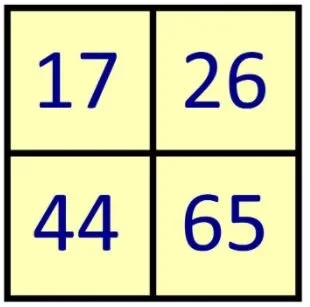
That number, drumroll please…..…... is your VO2 max. It is one of the best measures of your cardiorespiratory fitness (CRF). But more than just fitness, it also is one of the best measures of your overall health, including your risk for heart attack, stroke, diabetes, Alzheimer’s, as well as your “all-cause” mortality.

Path integration / DR are used when there are no landmarks. On the other hand, if any environmental cue is available it is immediately used. Most animals, including humans, alternate between using landmarks when they are available (“now that I can see that Church spire, I know where I am”) and practicing DR when they are not.

This is dedicated to Professor Marvin Creamer who died August 12, 2020 at the age of 104. He remains the only person to circumnavigate the globe without the use of any navigational instruments: no GPS, electronics, radio, compass, sextant, and not even a wristwatch.

We’d better, as we are still dealing with Covid and probably will be for the next year. Wait, does Covid-19 effect our sleep? It certainly does and in fact some experts now refer to it as “Coronasomnia.”

Think about the last time you were so engaged in an activity – boating or otherwise – that you simply lost track of time. You were so focused on the task or race that nothing else mattered. This is flow state previously known (for athletes) as being “in the zone.”



Ok, so what is a baseball picture doing on a nautical health blog? Well there’s a story of course. In 1995, a friend and I went to Phillies Dream Week, an adult fantasy camp for middle aged baseball wannabes and retired major leaguers who were there for love and /or money.
Cruising has become an increasingly popular vacation option, especially among seniors who appreciate the convenience, comfort, and variety of activities offered on cruise ships. However, while cruising can be a fun and relaxing way to travel, it also presents unique health challenges that seniors should be aware of. In this article, we will explore some of the most common health issues associated with cruising and offer tips for seniors to stay healthy and safe while enjoying their time on the water.